|
|
Interviews in Morning Sun include:
Intergenerational and family stories
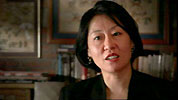
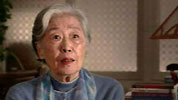 Wang Guangmei and Liu Ting, the widow of
China's State President, Liu Shaoqi, the main target of the
Cultural Revolution, and his daughter. This is the first time
Wang Guangmei, a major Communist Party figure at the center of
power in China who was famously denounced during the Cultural
Revolution and jailed for many years, is interviewed in-depth
about the Great Leap Forward and her experiences in the Cultural
Revolution.
Wang Guangmei and Liu Ting, the widow of
China's State President, Liu Shaoqi, the main target of the
Cultural Revolution, and his daughter. This is the first time
Wang Guangmei, a major Communist Party figure at the center of
power in China who was famously denounced during the Cultural
Revolution and jailed for many years, is interviewed in-depth
about the Great Leap Forward and her experiences in the Cultural
Revolution.
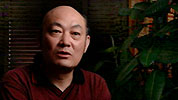 Yu Luowen discusses his older brother, Yu
Luoke, an extraordinarily prescient critic of the Cultural
Revolution and political manipulation in China, who was executed
in 1970 for his ideas. Refused entry to university because his
parents had been capitalists, Yu Luoke became a worker. His
essays on equality and the right to revolution made him famous
in 1967, but they were later denounced by the authorities. More
incriminating were a series of scathing comments about the
unfolding political drama and its follies that Yu Luoke wrote in
his personal diary in mid-1966. (Only short excerpts of his
diary have been published to this day, for it was confiscated by
the authorities and has never been returned to his family.)
Yu Luowen discusses his older brother, Yu
Luoke, an extraordinarily prescient critic of the Cultural
Revolution and political manipulation in China, who was executed
in 1970 for his ideas. Refused entry to university because his
parents had been capitalists, Yu Luoke became a worker. His
essays on equality and the right to revolution made him famous
in 1967, but they were later denounced by the authorities. More
incriminating were a series of scathing comments about the
unfolding political drama and its follies that Yu Luoke wrote in
his personal diary in mid-1966. (Only short excerpts of his
diary have been published to this day, for it was confiscated by
the authorities and has never been returned to his family.)
  Li Rui and his daughter Li Nanyang. Li Rui, the
Communist Party veteran who drew international attention for his
recent call for political reform at the 16th Party Congress, was
at one time Mao’s secretary. As an idealistic youth, he
traveled to the Communist base at Yan'an in the late 1930s, and
he first suffered revolutionary persecution there during the
early 1940s. As one of Mao's secretaries, he briefly had access
to the inner circle of China’s ruling elite in the 1950s,
but his criticisms of the Great Leap Forward led to his
denunciation and exile. His daughter, Li Nanyang, was
discriminated against in school because of her father’s
downfall. A sincere believer in the ideals of the revolution, Li
Nanyang rejected her father as an enemy of the Party; it was
many years before the two could reconcile.
Li Rui and his daughter Li Nanyang. Li Rui, the
Communist Party veteran who drew international attention for his
recent call for political reform at the 16th Party Congress, was
at one time Mao’s secretary. As an idealistic youth, he
traveled to the Communist base at Yan'an in the late 1930s, and
he first suffered revolutionary persecution there during the
early 1940s. As one of Mao's secretaries, he briefly had access
to the inner circle of China’s ruling elite in the 1950s,
but his criticisms of the Great Leap Forward led to his
denunciation and exile. His daughter, Li Nanyang, was
discriminated against in school because of her father’s
downfall. A sincere believer in the ideals of the revolution, Li
Nanyang rejected her father as an enemy of the Party; it was
many years before the two could reconcile.
A conversation with a founding member of the Red Guard
movement
 Luo Xiaohai was one of the most prominent of a
small group of high-school students who founded the Red Guards
in 1966. He was the author of major essays that encouraged
student rebellion and provided some of the most vituperative
language for the movement. His writings received Mao's personal
support. This is the first time he has spoken at length about
his involvement in the Cultural Revolution, a complex tale of
revolutionary idealism and disillusionment. Inspired by radical
Mao Thought to rebel against aspects of the socialist state, Luo
Xiaohai was also a vocal critic of the violence that erupted in
the Red Guard movement. His inner experience of revolution and
its betrayal led him to become one of the first among his
generation of high-school students to question not only the
Cultural Revolution, but the socialist system itself.
Luo Xiaohai was one of the most prominent of a
small group of high-school students who founded the Red Guards
in 1966. He was the author of major essays that encouraged
student rebellion and provided some of the most vituperative
language for the movement. His writings received Mao's personal
support. This is the first time he has spoken at length about
his involvement in the Cultural Revolution, a complex tale of
revolutionary idealism and disillusionment. Inspired by radical
Mao Thought to rebel against aspects of the socialist state, Luo
Xiaohai was also a vocal critic of the violence that erupted in
the Red Guard movement. His inner experience of revolution and
its betrayal led him to become one of the first among his
generation of high-school students to question not only the
Cultural Revolution, but the socialist system itself.
One of the most controversial Red Guards
 Song Binbin, the young female student who
first pinned a Red Guard armband on Mao Zedong in 1966,
signaling the Chairman's support for the Red Guards. In the
interview granted to the makers of Morning Sun, Song
recounts for the first time how the Communist media fabricated a
name for her in order to whip up popular frenzy for the Cultural
Revolution, and how the resulting rumors about her have affected
her life ever since.
Song Binbin, the young female student who
first pinned a Red Guard armband on Mao Zedong in 1966,
signaling the Chairman's support for the Red Guards. In the
interview granted to the makers of Morning Sun, Song
recounts for the first time how the Communist media fabricated a
name for her in order to whip up popular frenzy for the Cultural
Revolution, and how the resulting rumors about her have affected
her life ever since.
Photographs of All Interviewees
|
© Long Bow Group, Inc. All Rights Reserved.