
Morning Sun, A Documentary Film | Film Reviews
|
|
Morning Sun, A Documentary Film | Film Reviews |











|
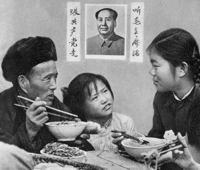
TV Guide Morning Sun Carma Hinton, Geremie R. Barme and Richard Gordon's informative and richly illustrated documentary surveys China's Great Proletarian Cultural Revolution, attempting a coherent history of what looks in retrospect like an outbreak of national madness. It erupted in 1964, in the wake of Chairman Mao Tse-Tung's disastrous economic revitalization program, the "Great Leap Forward," and lasted until Mao's death in 1976. The Cultural Revolution was conceived as a means of revitalizing the spirit of Mao's 1949 people's rebellion, whose appeal was fast fading under pressure of persistent poverty and widespread famine that had by the early 1960s become endemic throughout the Chinese countryside. The new revolutionary spirit was taken up by the first generation of Chinese youth weaned on such propaganda extravaganzas as the 1964 stage spectacular The East Is Red; [Morning Sun] includes revealing footage of this extraordinary display. Mao's Cultural Revolutions devolved into a reign of terror whose ferocity might have given Robespierre pause. Indelible images from this baffling period in China's long, strange trip through the second half of the 20th century have come to symbolize Mao's China: Thousands of fervid Chinese in thrall to the cult of personality surrounding their fearless leader, crowded into Tianamen Square waving their Little Red Books. Hapless artists, intellectuals, former capitalists and other suspected "counterrevolutionaries" forced to wear signs around their necks advertising their "crimes" being beaten -- sometimes to death -- by their neighbors and roving bands of teenaged Red Guards. Replete with powerful first-person accounts from various sectors of Chinese society, the film brilliantly mixes footage of the Revolution's Commie-kitsch propaganda with the reality of contemporary photographs. Witnesses range from Wang Guangmei, the widow of China's imprisoned president, Liu Shaoqi, targeted as people's enemy number one, and his daughter, Liu Ting; to Luo Xiaohai, a founding member of the original group of high-school students who, dissatisfied with China's educational system, sought to drive the "anti-Party conspiracy" from their schools and became known as the dreaded Red Guard. And while a deeper analysis of the ways in which Party Central used the Red Guards to further their own ends would have been appreciated, the film offers an invaluable overview of a national tragedy that continues to boggle the mind. (In English and Mandarin, with English subtitles.) Ken Fox, tvguide.com |
About the Site |
Living Revolution |
Smash the Old World! |
Reddest Red Sun |
Stages of History |
The East is Red
The Film |
Multimedia |
Images |
Library | Site Map
Home
© Long Bow Group, Inc. All Rights Reserved.