
Living Revolution | Red Guards
|
|
Living Revolution | Red Guards |











|
In 1966, a group of middle school students in Beijing named
themselves "Chairman Mao's Red Guards." Mao's support for them led
to the name "Red Guard" being adopted by groups who were sanctioned
by Mao and his supporters to "rebel against the system" all over
China. Sworn to protect Chairman Mao and his revolutionary line, the
Red Guards and other, older revolutionary rebels caused havoc and
eventually turned on each other, resulting in great destruction and
considerable loss of life.
Once the Red Guards had served their purpose of overturning the old order, these restive young people were exiled from the cities to be re-educated by the peasants in the countryside. Many did not return to the cities until the late 1970s; some never did. For many people today, images of fanatical Red Guards dressed in old army jackets and wearing red armbands, waving copies of Mao's Little Red Book and chanting "Long Live Chairman Mao!", are all that remain of the complex, at times idealistic, and often violent student movement of the Cultural Revolution.
Artifacts and Multimedia:
to include diaries, photos, posters, movies, songs, original
interviews 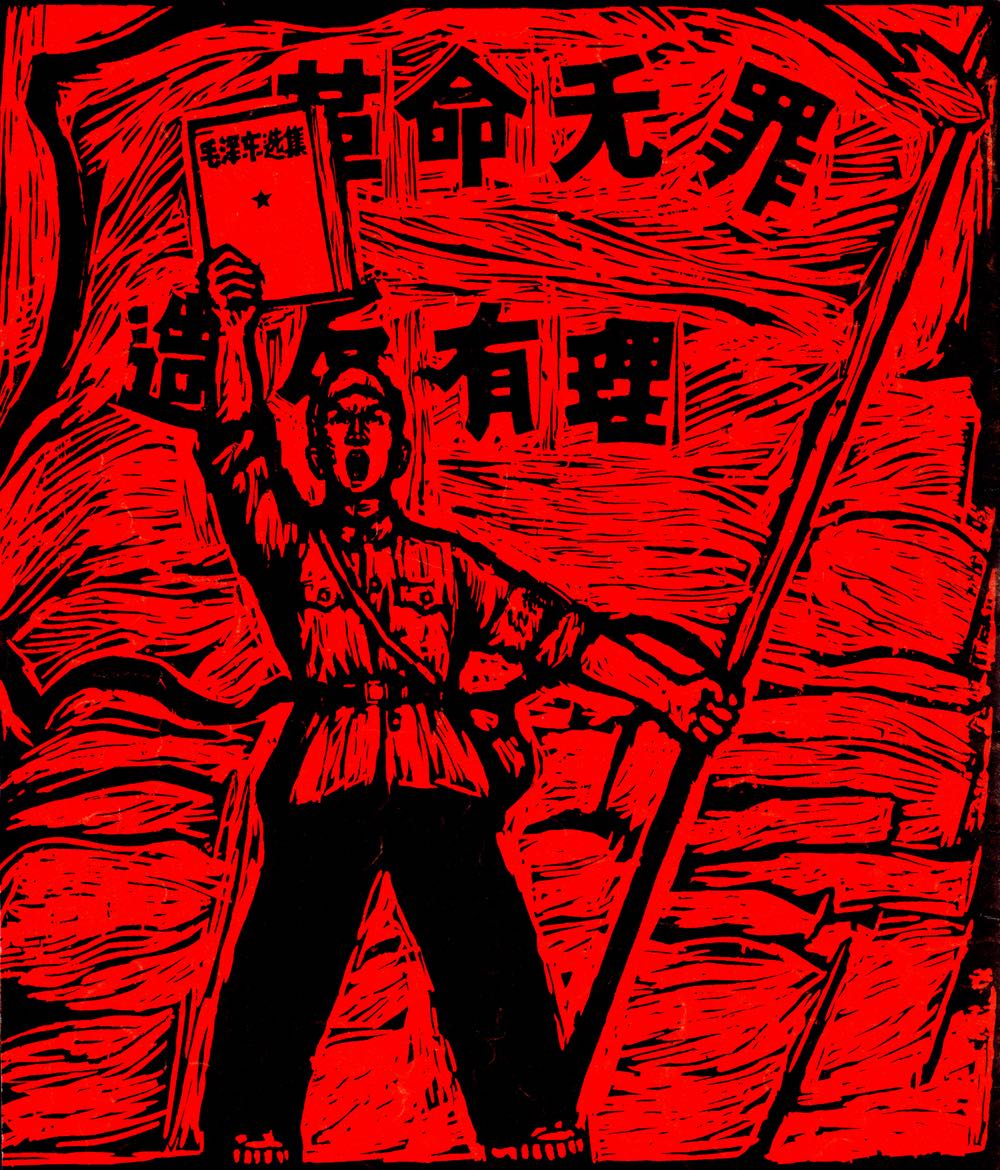
Who they were: background culture, education, icons While young participants in the Cultural Revolution are commonly referred to simply as “Red Guards,” in reality, they were originally one specific group of students. These students decided to call themselves ‘Red Guards’, hong weibing; they saw themselves as soldiers (bing) who were fighting to protect (wei) the Revolution and Mao Zedong Thought (represented by the word ‘red’ or hong). Readings: Essay on Red Guard uniforms | Original Articles: "Red Guards Destroy the Old and Establish the New," "The Red Guards' Battle Song, We Are Chairman Mao's Red Guards" Additional Readings Perry, Elizabeth J. and Li Xun. "Revolutionary Rudeness: The Language of Red Guards and Rebel Workers in China's Cultural Revolution." Indiana East-Asian Working Paper Series on Language and Politics in Modern China (July 1993): 1-18. Schoenhals, Michael, "Talk about a Revolution: Red Guards, Government Cadres, and the Language of Political Discourse," Indiana East Asian Working Paper Series on Language and Politics in Modern China (June 1993): 39. Wagner, Vivian, "Songs of the Red Guards: Keywords Set to Music," Indiana East Asian Working Paper Series on Language and Politics in Modern China (Winter 1996). Related sections: A New Long March and Smash the Old World! |
About the Site |
Living Revolution |
Smash the Old World! |
Reddest Red Sun |
Stages of History |
The East is Red
The Film |
Multimedia |
Images | Library |
Site Map
Home
© Long Bow Group, Inc. All Rights Reserved.